



.avif)
)%20(1920%C2%A0%C3%97%C2%A0900%C2%A0px).avif)
Before you continue: this article builds on our first analysis exploring LinkedIn’s rise as a source cited by generative AI systems. For full context, we recommend reading the first article first: Why LinkedIn Is Becoming a Key Source for AI Answers.
What you’ll find in this guide:
- Introduction
- Visibility Is No Longer Enough: Enter Citability
- Volume Is Losing Value, Expertise Is Winning
- Authority Is Shifting from Brands to Individuals
- Your Website Is No Longer the Only Centre of Gravity
- What This Changes for B2B Marketing Teams
- Conclusion
Introduction
LinkedIn has become an important source in AI-generated answers. But the real story lies elsewhere: the rules of B2B content are changing.
When answers are generated rather than simply searched for, content performance no longer depends only on visibility. It also depends on whether content can be selected, understood and reused by AI systems.
In other words, B2B content is no longer just about attracting an audience. It also needs to exist inside AI-generated answers.
This shift forces brands to rethink their strategy: what they produce, how they structure it, and why some content gets surfaced while other content is ignored.
Visibility Is No Longer Enough: Enter Citability
For years, content performance was measured through traffic, clicks and SEO rankings.
Generative search engines are changing that logic.
More and more users now get answers directly through OpenAI ChatGPT, Google Gemini, Perplexity AI Perplexity or Google AI Overviews, without visiting the original source.
This shift was anticipated. In 2024, Gartner forecast a 25% decline in traditional search volumes by 2026, driven by the growth of AI conversational usage.
Content can now influence decisions without generating a click.
A new performance metric is emerging: citability. In other words, a piece of content’s ability to be quoted, summarised or reused in an AI-generated response.
That changes how content should be written. B2B content now needs to be clear, structured and easy to reuse: comparisons, frameworks, methods and practical answers.
For marketing teams, visibility alone is no longer enough. Usefulness matters more.
Volume Is Losing Value, Expertise Is Winning
B2B content strategies have long favoured quantity: publish more often, cover more keywords, dominate the landscape.
LLMs are changing the hierarchy of value.
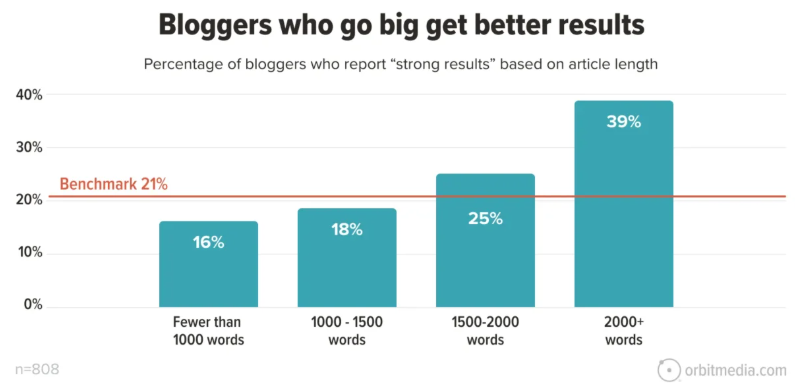
Faced with a growing mass of generic content, models increasingly favour content that adds something distinctive: first-hand experience, sector insight, practical methodology or a strong point of view.
Orbit Media Studios research supports this trend: the highest-performing content is often the most in-depth and original.
Three truly useful pieces of content can now create more impact than twenty interchangeable ones.
The challenge is no longer publishing more. It is publishing better.
Authority Is Shifting from Brands to Individuals
Another major shift concerns authority.
For years, editorial legitimacy mainly came from the brand: corporate websites, white papers and institutional messaging.
Today, human-led content is gaining ground.
According to research from LinkedIn and Edelman, nearly three in four B2B decision-makers see thought leadership as more trustworthy than traditional marketing materials when evaluating a business.
AI systems also value signals such as visible expertise, real-world experience and consistency over time.
That is why contributions from experts, consultants and practitioners often surface in AI-generated answers.
For B2B businesses, the brand page alone is no longer enough. Leaders, specialists and employees now need to be activated as trusted voices.
Your Website Is No Longer the Only Centre of Gravity
For years, the company blog sat at the heart of content strategy.
That model is becoming more limited.
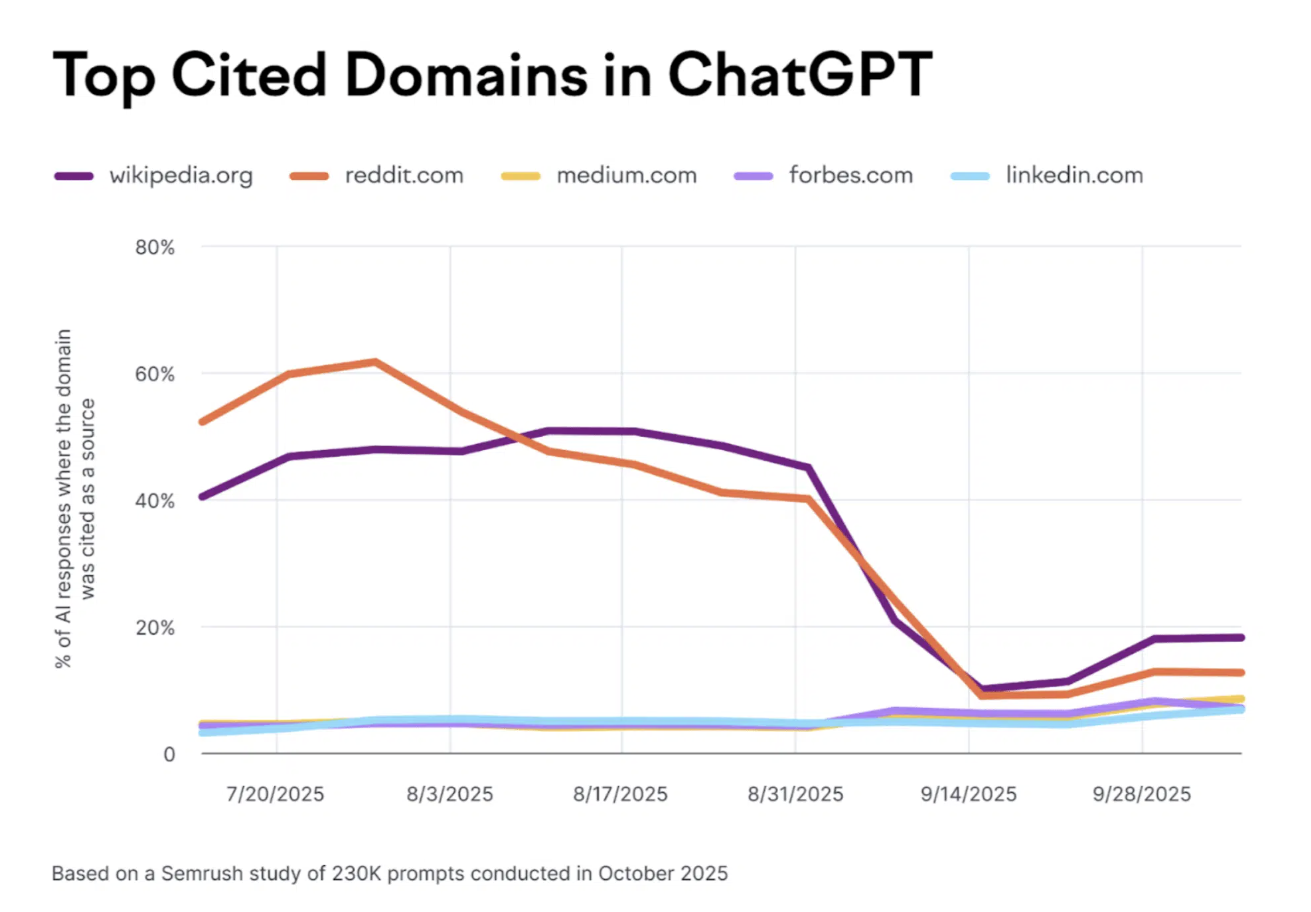
LLMs draw from a much broader ecosystem: specialist articles, forums, videos, expert networks, comparisons and communities.
Websites still matter for conversion, credibility and editorial control. But they are no longer the only entry point.
B2B brands now need to think of content as a distributed system that exists across multiple surfaces.
What This Changes for B2B Marketing Teams
LLMs create new trade-offs.
- Should teams keep producing ten average pieces of content per month, or invest in two reference assets?
- Should they focus only on the website, or strengthen the presence of experts across professional networks?
- Should they measure only traffic, or add new visibility and influence metrics?
These choices are becoming strategic.
According to LinkedIn and Edelman, 75% of decision-makers say thought leadership content led them to consider a product or service they had not previously considered.
Even more strikingly, nine in ten say they are more receptive to outreach from companies that consistently publish high-quality expert content.
The highest-performing marketing teams will be those able to combine human expertise, editorial excellence and a clear understanding of new distribution channels.
Conclusion
LLMs are not replacing B2B content strategies. They are redefining what makes them effective.
Competition is shifting:
- from visibility to usefulness
- from volume to relevance
- from brands to individuals
- from a single website to an ecosystem of sources
Creating content is no longer only about capturing attention. It is about becoming a credible, clear and structured source.
The brands that understand this early will gain a decisive advantage. They will not just aim to be found. They will become the sources AI answers are built on.
Want to be considered by LLMs? Work with us to build your LinkedIn strategy.




.png)


.avif)
