


.avif)
)%20(1920%C2%A0%C3%97%C2%A0900%C2%A0px).avif)
LinkedIn’s role in B2B strategies is evolving rapidly. Once centered around networking and expert-driven content, the platform is gradually becoming a true media ecosystem powered by video, creators, and sponsored content.
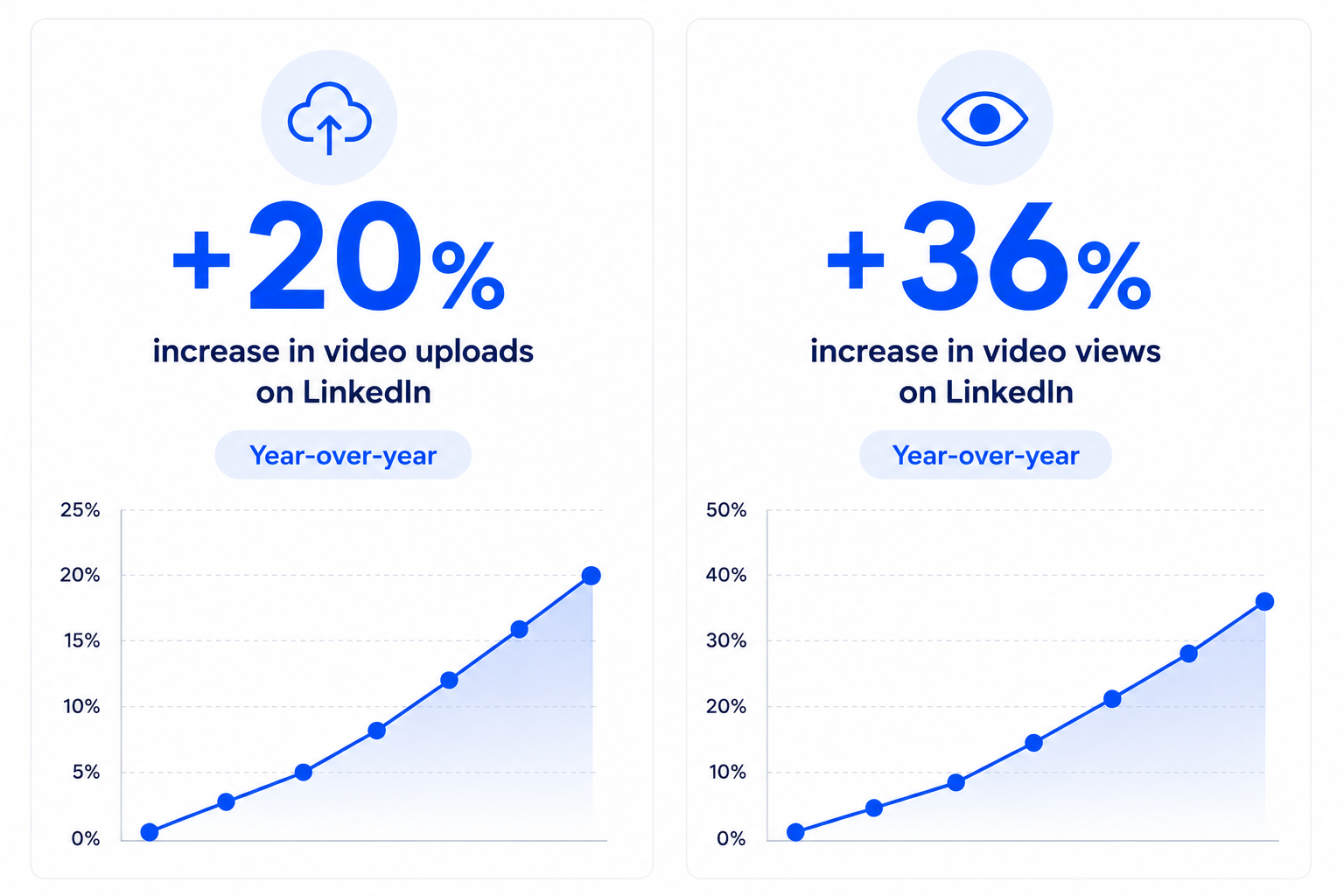
Video is taking an increasingly important place on the platform. According to Reuters, video uploads on LinkedIn have increased by 20%, while video views have grown by 36%.
In this context, LinkedIn is significantly expanding BrandLink, its video sponsorship solution that allows brands to associate their campaigns with premium content published by media outlets — and now by B2B creators as well.
The objective is clear: to build a true ecosystem of sponsored professional content combining creators, advertisers, and native video formats.
For B2B brands, as well as agencies specialized in LinkedIn influence marketing, this evolution represents a strategic turning point.
What you’ll find in this guide:
- Video Is Becoming a Growth Engine on LinkedIn
- BrandLink: From Media Program to the B2B Creator Economy
- Why Is LinkedIn Investing So Heavily in Video?
- What BrandLink Changes for B2B Brands
- BrandLink Opportunities for Creators and B2B Agencies
- What Formats Could Emerge on LinkedIn Tomorrow ?
- Conclusion
Video Is Becoming a Growth Engine on LinkedIn
BrandLink: From Media Program to the B2B Creator Economy
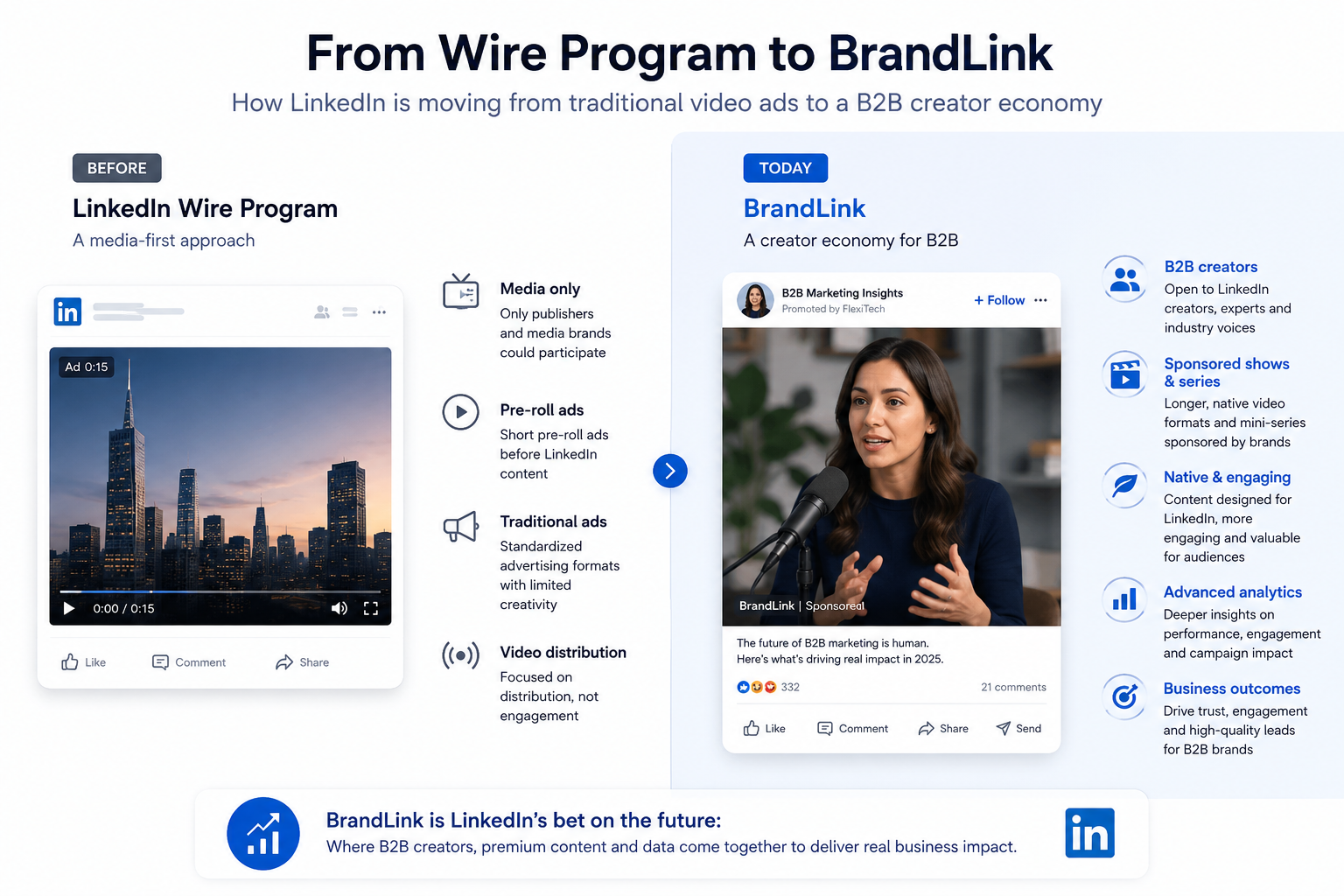
Originally, BrandLink — formerly known as the LinkedIn Wire Program — mainly allowed advertisers to place video ads alongside content from recognized media outlets such as Reuters, Bloomberg, or Forbes.
The model was primarily based on “pre-roll” advertising formats: an ad displayed before premium editorial content, within a safe and credible environment for brands.
But LinkedIn is now evolving this approach.
The platform is opening BrandLink to more creators and editorial formats, with a much stronger focus on the B2B creator economy. According to Reuters and Social Media Today, LinkedIn is currently developing several thematic video shows and professional series directly integrating sponsored partnerships.
In concrete terms, BrandLink is LinkedIn’s advertising solution that allows brands to associate their video campaigns with premium content published by media outlets or professional creators. The goal is to offer more engaging and credible sponsored formats integrated directly into high-value editorial environments.
This new version of BrandLink goes beyond traditional advertising. Creators can now produce more native sponsored content, brands benefit from more engaging premium environments, and LinkedIn provides advertisers with more detailed performance data.
According to Reuters, BrandLink-generated revenue reportedly increased by more than 200%, highlighting growing advertiser interest in these new sponsored video formats.
The platform’s challenge is twofold: capturing the growth of professional video content while strengthening its positioning against platforms that already dominate the creator economy, such as YouTube and TikTok.
Why Is LinkedIn Investing So Heavily in Video?
If LinkedIn is accelerating BrandLink today, it is primarily because user behavior on the platform is evolving rapidly.
Long dominated by text posts and carousels, LinkedIn now sees video becoming a central format in professional content consumption. The platform is therefore looking to retain users’ attention for longer while encouraging more immersive and engaging formats.
This evolution is part of a broader trend: the rise of the B2B creator economy.
The “creator economy” refers to creators who build an audience and monetize their expertise through digital platforms, brand partnerships, or sponsored content.
Historically associated with platforms such as YouTube, TikTok, or Instagram, the creator economy is now expanding into professional environments like LinkedIn. More and more B2B creators are emerging in fields such as AI, marketing, HR, finance, and tech.
Through BrandLink, LinkedIn aims to structure this ecosystem by enabling brands to collaborate more easily with these expert profiles through sponsored video formats and premium content. As highlighted by Tech in Asia, the platform is currently accelerating the development of new premium video formats and collaborations with professional creators.
This approach allows creators to monetize their content, advertisers to reach qualified audiences, and users to consume more engaging and contextualized formats.
This logic is particularly relevant in B2B, where the credibility of speakers plays a key role in brand perception and decision-making.
What BrandLink Changes for B2B Brands
The evolution of BrandLink opens new opportunities for B2B companies.
Until recently, LinkedIn influence strategies mainly relied on organic partnerships: sponsored posts, employee advocacy, or occasional collaborations with industry experts.
For B2B brands, the value of BrandLink does not lie solely in the video format itself, but in the ability to integrate sponsored content into environments perceived as more credible and expert-driven.
This approach allows advertisers to leverage the trust already established between B2B creators and their audiences while benefiting from LinkedIn’s targeting and measurement capabilities.
One of the main advantages of this model lies in the credibility of the content being distributed. In B2B, audiences generally place more trust in recognized experts and high-value content than in traditional advertising formats.
BrandLink therefore enables companies to integrate into more engaging editorial environments while maintaining LinkedIn’s targeting and measurement capabilities.
According to Social Media Today, LinkedIn is notably developing new sponsored video formats and enhancing the performance data available to advertisers.
This evolution gradually brings LinkedIn closer to the models developed by major creator economy platforms, while maintaining a strong differentiator: a professional audience made up of decision-makers, experts, and high business-value profiles.
For B2B brands, this opens the door to more editorialized, more credible, and potentially more effective campaigns in terms of awareness, engagement, and lead generation.
BrandLink Opportunities for Creators and B2B Agencies
The expansion of BrandLink also marks a major evolution for B2B content creators.
Until recently, monetization opportunities on LinkedIn remained relatively limited compared to other social platforms. With BrandLink opening up to creators and sponsored formats, LinkedIn is now beginning to structure a true economic model around professional video content.
For B2B creators, this evolution represents an opportunity to:
- increase their visibility,
- strengthen their expert positioning,
- diversify their revenue streams,
- and build more ambitious editorial formats.
B2B influence agencies also have a key role to play in this new ecosystem.
Beyond simply connecting brands and creators, agencies can now support companies in designing much more comprehensive initiatives combining editorial strategy, video production, sponsorship, and LinkedIn amplification.
The challenge is no longer just identifying relevant profiles, but building real formats capable of generating engagement and strengthening brand credibility among qualified professional audiences.
Content formats such as expert mini-shows, industry interviews, news analysis, or sponsored webinars could gradually become major visibility drivers for B2B strategies on LinkedIn.
For a specialized agency like Les Années Folles, BrandLink therefore opens the way to hybrid initiatives combining influence, media, and premium content.
What Formats Could Emerge on LinkedIn Tomorrow ?
The evolution of BrandLink also shows that B2B content on LinkedIn is becoming increasingly editorialized.
Brands are no longer simply looking to distribute promotional messages: they now want to create content capable of sustainably capturing the attention of decision-makers and professional audiences.
In this context, several formats seem particularly suited to the development of BrandLink, such as industry mini-shows, expert interviews, “1 insight in 2 minutes” formats, news analysis content, short sponsored webinars, or even video series focused on specific business challenges.
This approach is gradually transforming LinkedIn into a true professional media platform, where expert content becomes a lever for influence and performance in its own right.
As Reuters points out, LinkedIn is now seeking to capitalize on the strong growth of video in order to increase engagement on the platform and attract more advertisers to its premium advertising solutions.
Conclusion
With BrandLink, LinkedIn confirms its ambition to become far more than just a professional networking platform.
By investing in B2B creators, sponsored content, and premium video, the platform is gradually building a true media ecosystem dedicated to professional audiences.
For brands, this evolution opens new communication opportunities that are more engaging, more credible, and more measurable. For creators and agencies, it also signals the growing professionalization of the B2B creator economy on LinkedIn.
One thing now seems clear: video and expert creators will play an increasingly central role in B2B influence strategies in the years ahead.



.png)


.avif)
